

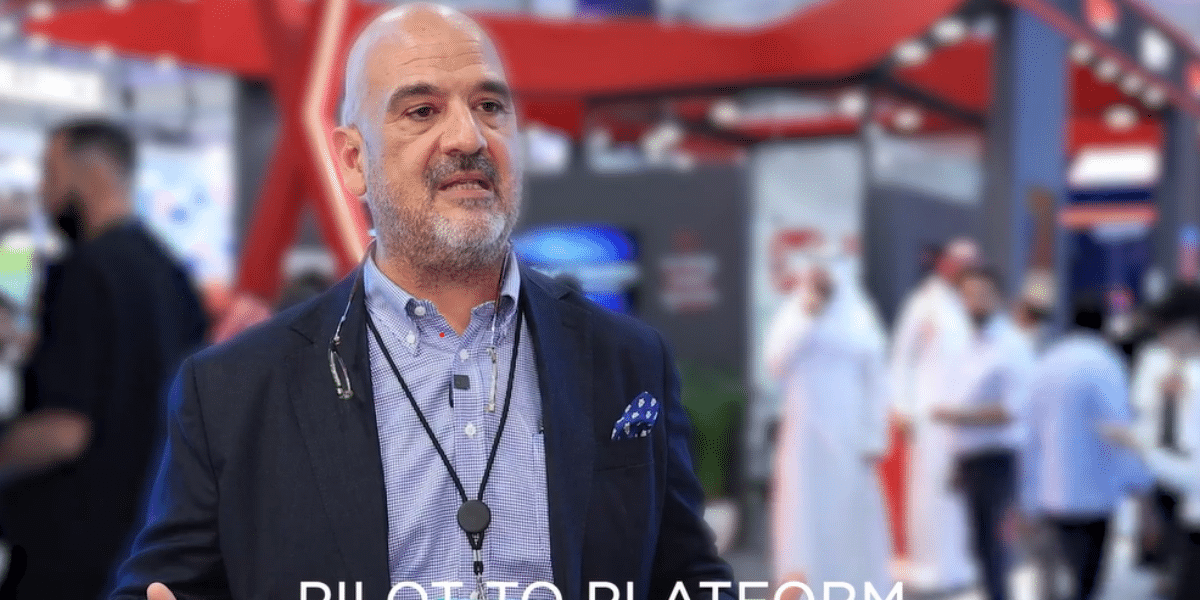
Mehmet Sazar, General Manager of Saudi Xerox, explains how organisations can move AI beyond experimentation, automate the right processes and scale adoption without compromising data security or governance.
As Saudi Arabia accelerates its AI ambitions, the conversation is shifting from experimentation to execution. For businesses, the challenge is no longer simply whether to adopt AI, but how to translate it into measurable improvements across workplace productivity, collaboration and decision-making.
In this exclusive ITP.NET video interview, Mehmet Sazar, General Manager of Xerox Saudi, examines what a genuinely AI-enabled workplace should look like and how intelligent automation could reshape the way employees work. He also explores where AI agents can deliver the greatest value and why organisations must carefully determine which decisions can be automated and which should remain human-led.
Sazar further discusses how Saudi businesses can scale AI while maintaining control over sensitive data, strengthening governance and meeting regulatory requirements. Looking towards the end of the decade, he considers the measurable role AI and workplace automation could play in supporting Saudi Vision 2030 and building more efficient, agile and digitally enabled organisations.
Watch the entire interview
About Saudi Xerox
Saudi Xerox is the representation of Xerox in Saudi Arabia and one of Olayan Group companies. It was established in 1986, with business lines that include providing solutions to improve business processes, automation and printing technology through an innovative vision of maximizing productivity and efficiency to create a better work environment.
The company draws on the global experience of Xerox and its strategic alliances with international partners to strengthen its role as a leading technology provider in the region.
* PCR content measured in accordance with IEEE Std 1680.2a™ – 2017 Standard for Environmental Assessment of Imaging Equipment – Amendment 1 — which is the standard used by EPEAT.
Click here to read the article on: